
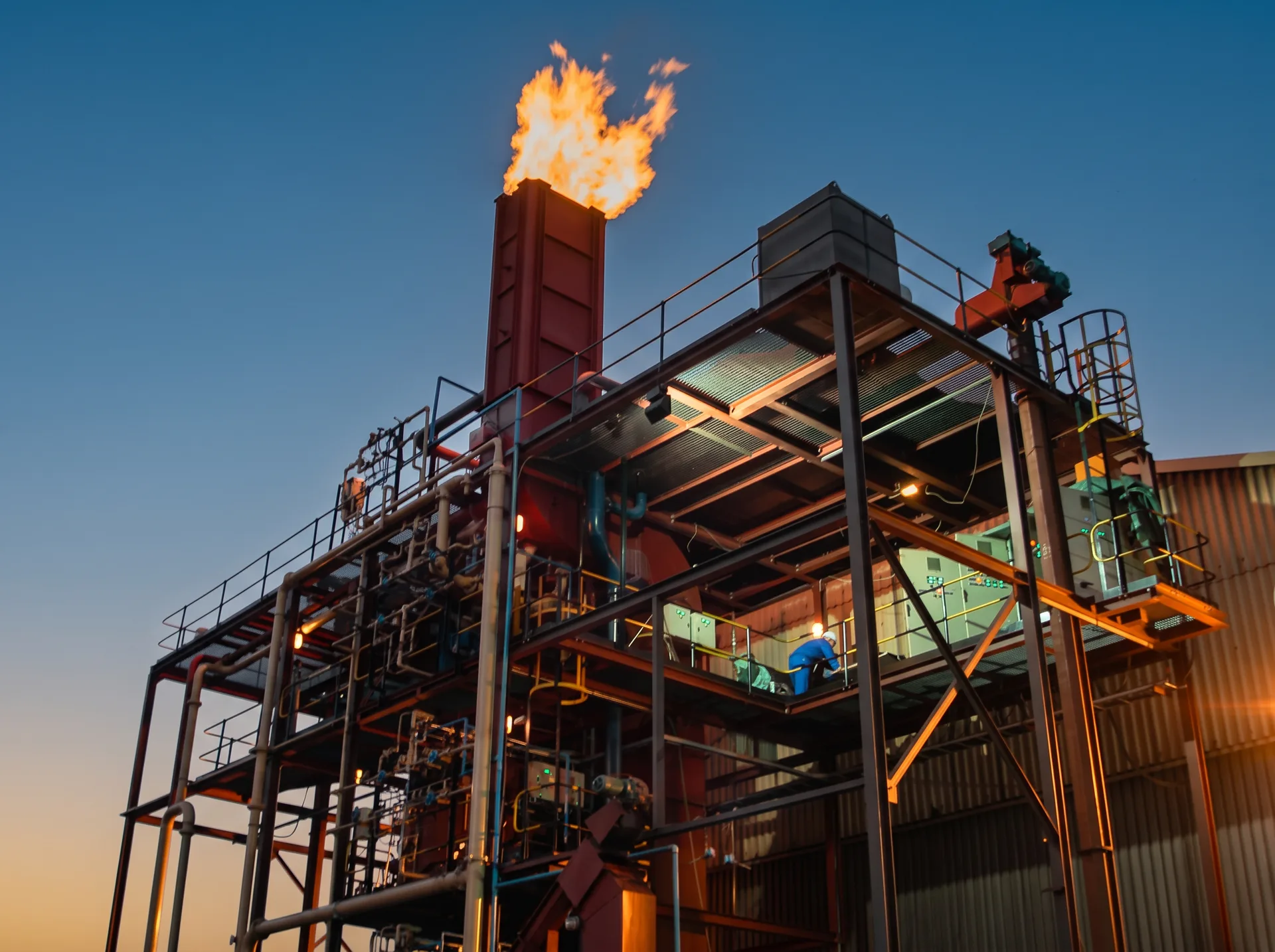
Flash Pyrolysis Technology
Flash changes everything.
Rapid thermal conversion technology engineered around the characteristics of the feedstock and required energy output.
What flash pyrolysis is
Heat, not combustion
Flash pyrolysis is the rapid thermal decomposition of suitable carbonaceous material under controlled, oxygen-limited conditions. Because oxygen is deliberately limited, the material does not burn — it breaks down thermally, releasing its carbon and hydrogen content into streams that can be recovered.
At a high level, three streams leave the conversion core: condensable hydrocarbon vapour, permanent and synthesis gases, and a carbon-rich solid fraction together with any inorganic material carried by the feedstock.
Reactor geometry and internal design, residence times, temperature profiles, control logic and gas-handling arrangements are proprietary and are not disclosed.
Oxygen-limited
A controlled atmosphere in which thermal decomposition replaces combustion.
Rapid
Fast heat transfer to prepared material rather than slow, prolonged heating.
Feedstock-led
Preparation, conversion and recovery duty are set by the stream itself.
Output-led
Downstream configuration follows the energy or product the project requires.
Plant systems
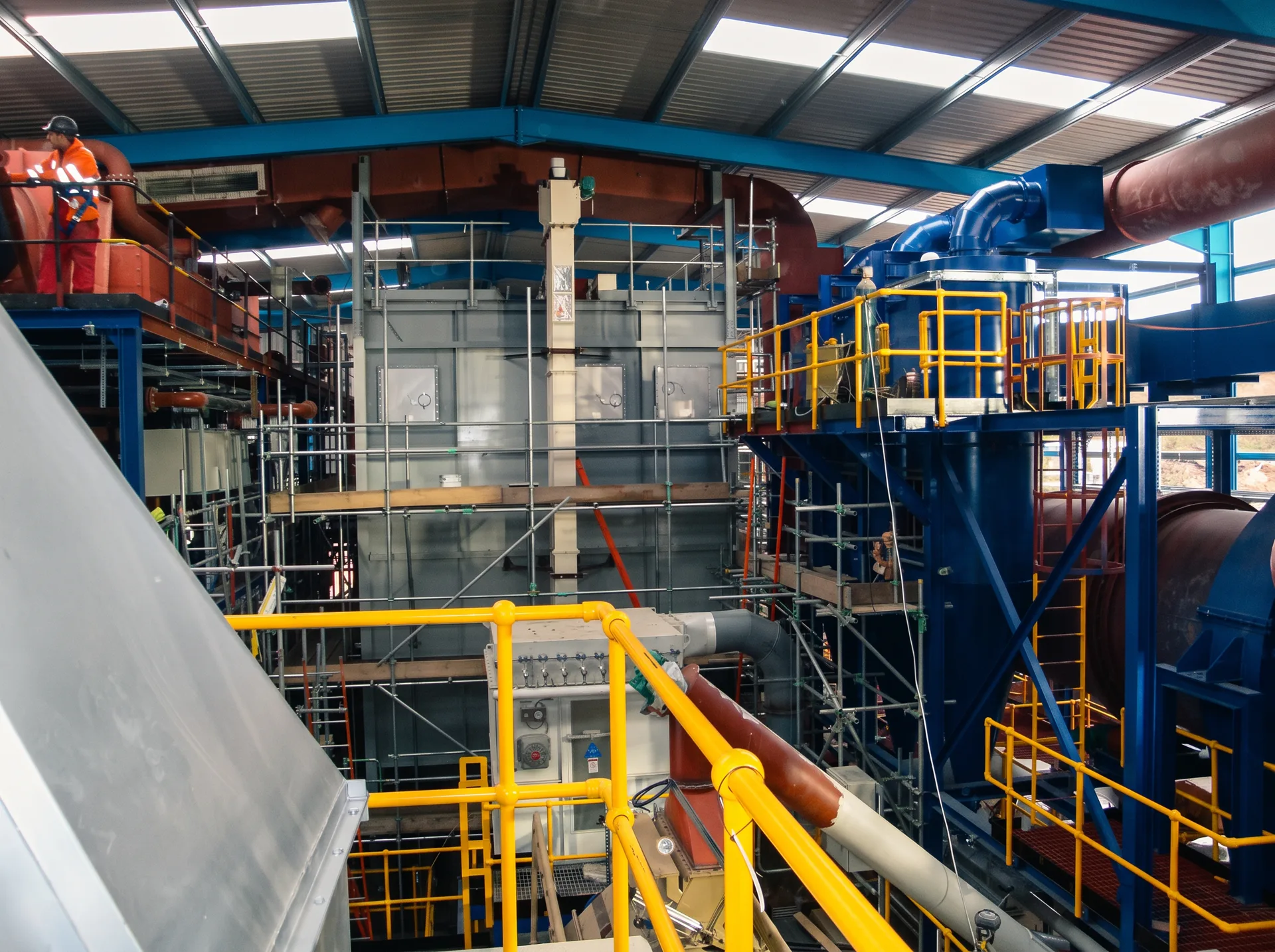
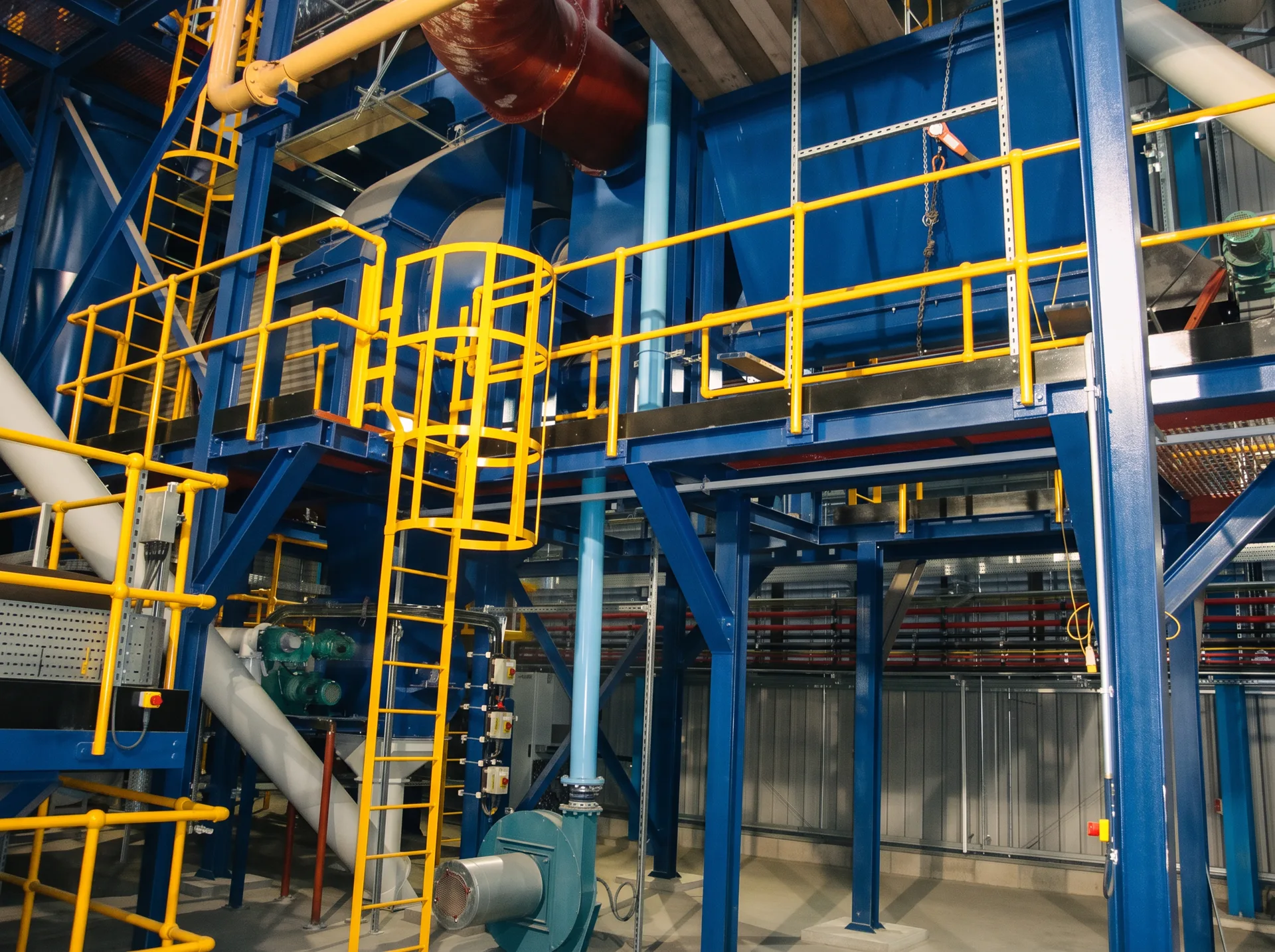
Preparation and conversion, engineered together
Process
Six stages, one engineered chain
Select a stage to see what it does.
Step 04 of 06
Flash pyrolysis
Rapid thermal decomposition of suitable carbonaceous material under controlled, oxygen-limited conditions. Reactor internals, thermal profiles, residence times and control logic are proprietary and not disclosed.
Conversion core
What goes in. What comes out.
Condensable hydrocarbons capable of being recovered and potentially upgraded.
Combustible gases and/or synthesis-gas components capable of energy recovery or further processing depending on system design.
Carbon-rich and inorganic material requiring feedstock-specific recovery or treatment.
Why flash pyrolysis?
Engineering advantages
Rapid conversion
Heat is transferred quickly to prepared material so decomposition happens fast rather than through slow, prolonged heating.
Feedstock flexibility
The platform is engineered around the stream it must handle, allowing a range of carbonaceous wastes to be considered on their own merits.
Modular engineering
Conversion, recovery and upgrading are engineered as defined blocks, so a plant can be assembled to suit the site and the duty.
Energy integration
Recovered thermal and electrical energy can be balanced against plant demand as part of the overall design.
Multiple product pathways
Vapour, gas and solid streams open routes toward power, liquid hydrocarbons and synthesis-based fuel pathways.
Scalable plant architecture
Capacity is addressed through repeatable process trains rather than a single fixed plant size.
Design principle
The feedstock
defines the plant.
Composition, moisture, ash, contaminants and calorific value determine preparation duty, conversion configuration, recovery equipment and every downstream step. No two waste streams produce the same plant.
Product yields and quality depend on feedstock, plant configuration and downstream upgrading. No waste stream automatically yields specification-grade fuels.