
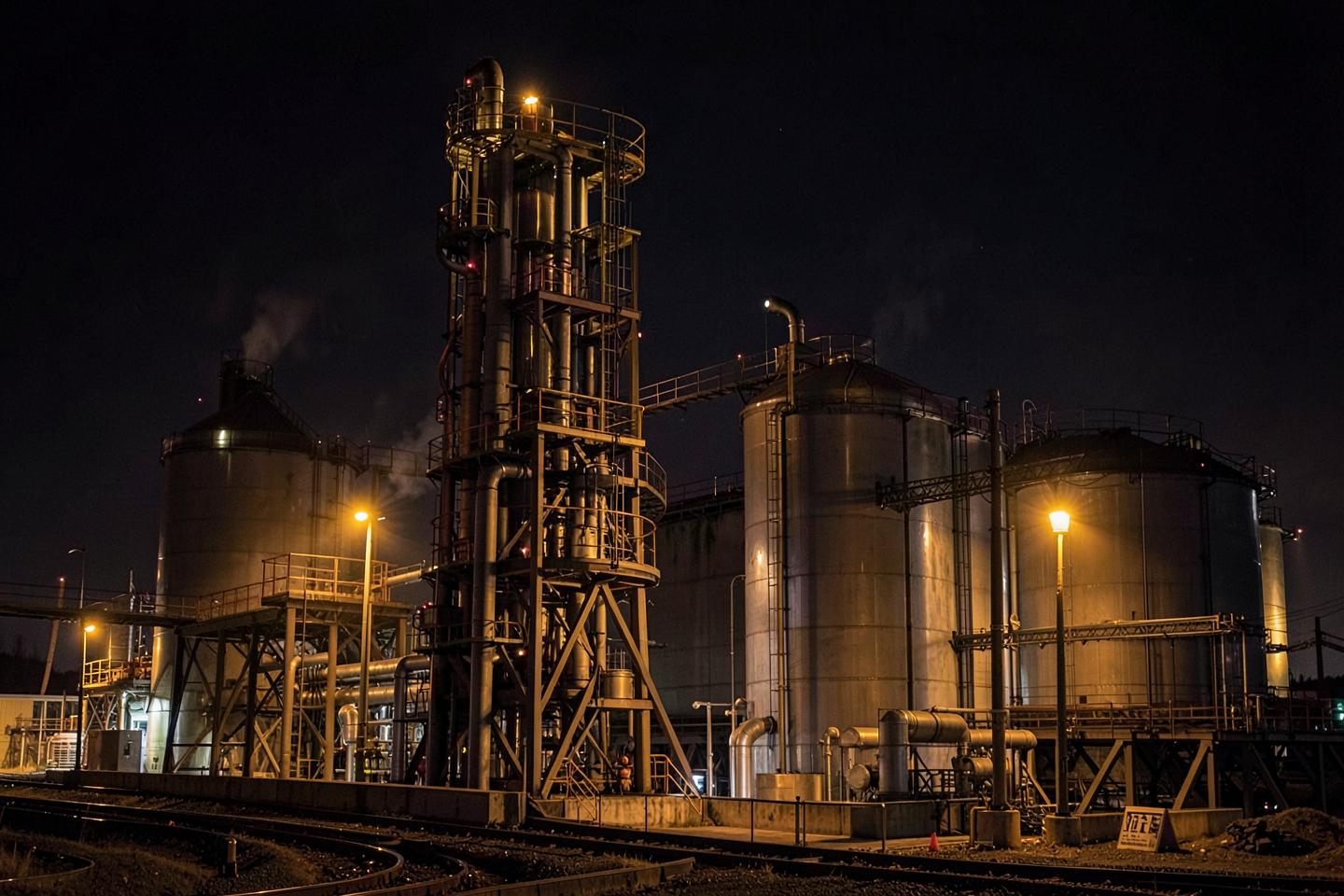
Waste to liquid fuels
Recover the molecule.
Condensable hydrocarbons released during flash pyrolysis can be recovered as liquid and progressively refined into hydrocarbon streams with real commercial value.
The pathway
Feedstock to hydrocarbon streams
- 01Carbonaceous feedstockCharacterised and prepared
- 02Flash pyrolysisRapid oxygen-limited conversion
- 03Hydrocarbon vapoursCondensable product stream
- 04CondensationVapour recovered as liquid
- 05Pyrolysis liquidRaw intermediate
- 06Cleaning / upgradingContaminants · water · stability
- 07FractionationSeparation by boiling range
- 08Valuable hydrocarbon streamsProducts and intermediates
Potential product pathways
What the liquid can become
Actual product distribution and quality depend strongly on the feedstock and on the downstream processing selected for the project. No single yield or specification applies across waste streams.
Outputs depend on feedstock, plant configuration and downstream upgrading. Products are described as potential pathways, not guaranteed specification-grade fuels.
Naphtha-range fractions
Lighter cuts of potential interest to petrochemical and chemical recycling routes.
Distillate / diesel-range fractions
Mid-boiling material that may serve as a fuel intermediate after upgrading.
Heavier hydrocarbon fractions
Higher boiling material for fuel-oil-type use, further processing or recycle.
Chemical recycling feedstocks
Hydrocarbon streams directed to chemical rather than combustion routes.
Circular fuel intermediates
Blend or refinery intermediates, subject to acceptance criteria.
Separation
Fractions separate by boiling range
Scroll to follow the separation. The graphic is illustrative: it shows the principle of cut separation, not PTE operating conditions.
Separation by boiling range
Light fraction
Lightest boiling rangeLight ends and gases, typically returned for energy use within the plant.
Naphtha-range
Low boiling rangePotential petrochemical or chemical recycling feedstock, subject to specification.
Middle distillate
Mid boiling rangeDiesel-range material that may be suitable as an intermediate after upgrading.
Heavy fraction
Highest boiling rangeHeavier hydrocarbons for fuel-oil-type use, further processing or recycle.
Illustrative only · no PTE operating conditions shown
Upgrading
Pyrolysis is the beginning.
Raw pyrolysis liquid is an intermediate. Product value is increased through a treatment sequence selected for the specific feedstock and the intended offtake route.
Contaminant removal
Targeted removal of species that limit product acceptance.
Dechlorination where required
Applied where chlorine-bearing feedstocks make it necessary.
Filtration
Removal of fines and particulate carry-over.
Dehydration
Reduction of water content to improve stability and handling.
Distillation
Separation into defined boiling-range cuts.
Guard-bed treatment
Protection of downstream catalysts and equipment.
Hydrotreating where appropriate
Applied when the product route and economics justify it.
Product blending
Combining cuts to meet a defined intermediate specification.
Further refining
Additional processing through appropriate third-party or partner facilities.
From waste stream
to hydrocarbon value stream.
Share feedstock composition, volume and intended offtake and PTE will outline the recovery and upgrading configuration worth evaluating.