
Waste to SAF
From waste.
To wing.
Exploring advanced pathways for converting suitable waste-derived carbon into synthetic aviation fuel.
The pathway
Carbon, followed end to end
Twelve stages, each of which has to work before the next one means anything. Scroll to illuminate the chain.
- 01
Waste
Carbonaceous waste, characterised and prepared
- 02
Flash pyrolysis / thermal conversion
Rapid, oxygen-limited conversion
- 03
Gas
Raw process gas leaving the conversion core
- 04
Gas cleaning
Particulates, tars and trace contaminants removed
- 05
Syngas conditioning
Composition, temperature and pressure matched to duty
- 06
CO + H₂
Conditioned synthesis gas components
- 07
Fischer–Tropsch synthesis
Catalytic conversion into hydrocarbon molecules
- 08
Synthetic hydrocarbons
Synthetic crude and waxes
- 09
Upgrading
Hydroprocessing and treatment steps
- 10
Fractionation
Separation into defined boiling-range cuts
- 11
SAF pathway
Aviation-range hydrocarbons, subject to qualification
- 12
Aircraft
Only once qualification and approvals are achieved
This is one plant configuration among several. A project is only routed toward an aviation fuel pathway where the feedstock, achievable gas quality, scale and offtake requirements support it.
Carbon in motion
The molecule journey.
Fischer–Tropsch synthesis is simple to state and demanding to engineer: properly conditioned carbon monoxide and hydrogen are catalytically converted into hydrocarbon molecules.
The product is a slate of hydrocarbon chains, not a single finished fuel. Aviation-range material only appears after upgrading, fractionation and finishing, and only qualifies as SAF once the applicable approvals are in place.
Not all waste automatically qualifies for SAF production. Every project stands on its own feedstock and process data.
CO + H₂
Conditioned synthesis gas
Fischer–Tropsch
Catalytic conversion
Hydrocarbons
Synthetic chains
Indicative sequence only · not presented as a complete chemical equation
Gas quality
The gas has to be right.
Reliable Fischer–Tropsch operation requires carefully controlled synthesis-gas composition and contaminant levels. The purification train, not the reactor alone, determines whether a waste-derived gas can be used for catalytic synthesis.
01
Particulate removal
Solids and fines separated from the raw gas.
02
Tar management
Condensable heavy species handled before downstream equipment.
03
Acid gas / contaminant management
Sulphur, chloride and other catalyst poisons addressed.
04
Gas conditioning
Temperature, pressure and composition matched to duty.
05
H₂:CO control
Ratio adjusted for the selected synthesis route.
06
Final polishing
Trace species reduced to protect the catalyst.
07
FT-ready synthesis gas
A stable, specified gas suitable for catalytic synthesis.
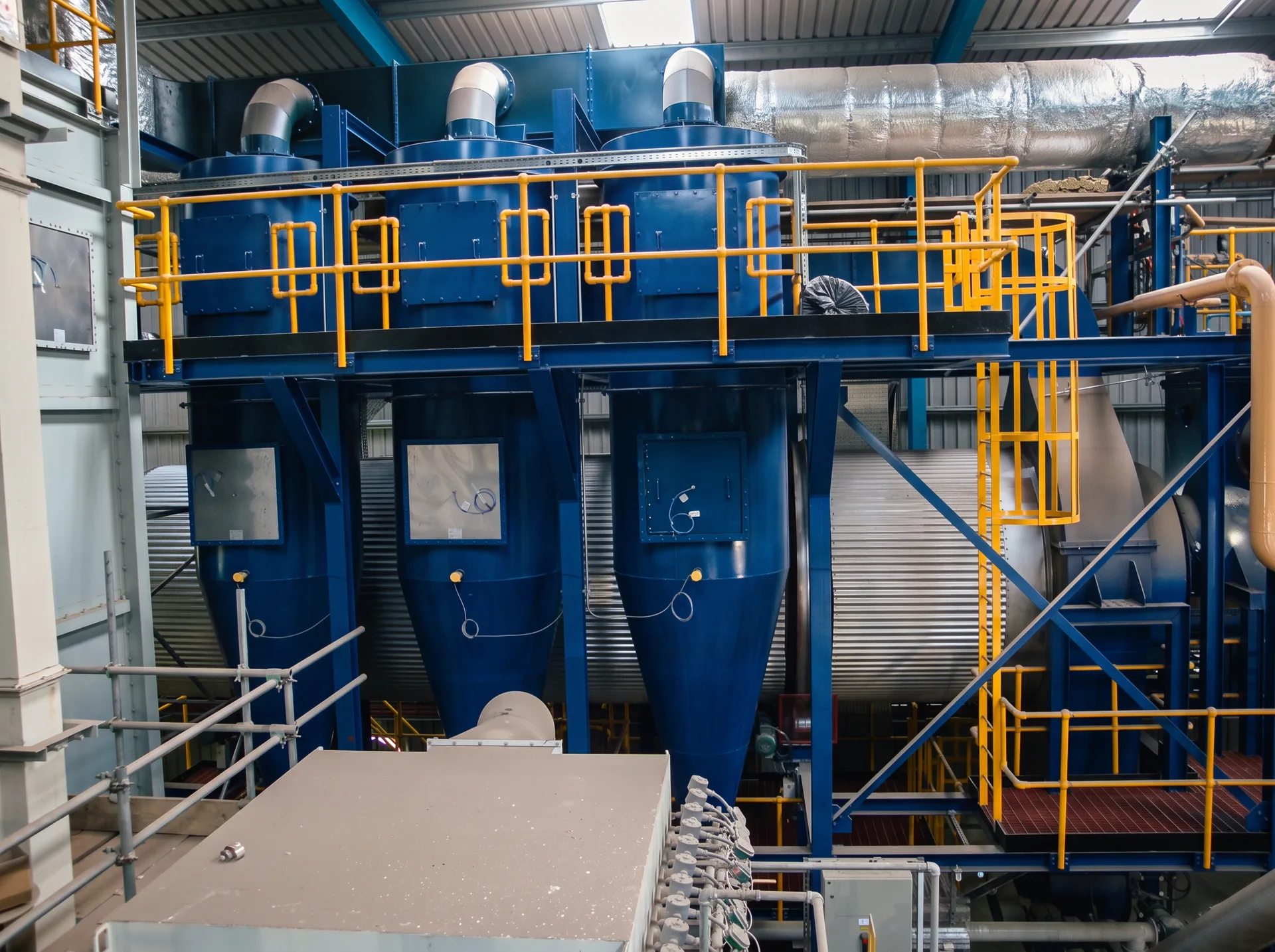
Contaminant limits, cleaning stages and conditioning duty are set by the feedstock and by the catalyst system selected for the project. Gas specification work is part of engineering, not an assumption.
Synthesis and downstream
From synthesis gas to aviation-range molecules
- 01
FT synthesis
Conditioned CO and H₂ are catalytically converted into hydrocarbon molecules.
- 02
Synthetic crude / waxes
A slate of synthetic hydrocarbon chains rather than a finished fuel.
- 03
Upgrading
Hydroprocessing and treatment convert chains into distillate-range material.
- 04
Fractionation
Separation into defined boiling-range cuts and product finishing.
SAF-range hydrocarbons
Aviation-range material, subject to qualification and approval.
Synthetic diesel-range products
Middle distillate cuts from the same synthesis slate.
Synthetic naphtha-range products
Lighter cuts of interest to chemical and fuel routes.
Other co-products
Additional fractions, recovered heat, power and residues.
Technical disclaimer
Final SAF qualification depends on the feedstock, production pathway, process configuration, upgrading route, applicable ASTM requirements, sustainability criteria, certification and regulatory approvals. Untreated pyrolysis oil is not SAF and is never described as such, and no intermediate stream is called certified SAF unless certification has actually been achieved.
The objective
Waste.
Molecule.
Flight.
The carbon already exists. Our objective is to put it back to work — through engineering that is proven step by step, not claimed in advance.
Feedstock first
Every SAF study begins with waste characterisation: composition, moisture, ash, contaminants and calorific value.
Gas specification
Cleaning and conditioning duty are engineered around the catalyst system and target product.
Certification route
The approval path is selected with the offtaker and relevant authorities before any fuel claim is made.