
Feedstocks
Carbonaceous waste, characterised first
Feedstock is the starting point of every plant design. What is in the waste determines the preparation, conversion and upgrading steps that follow.
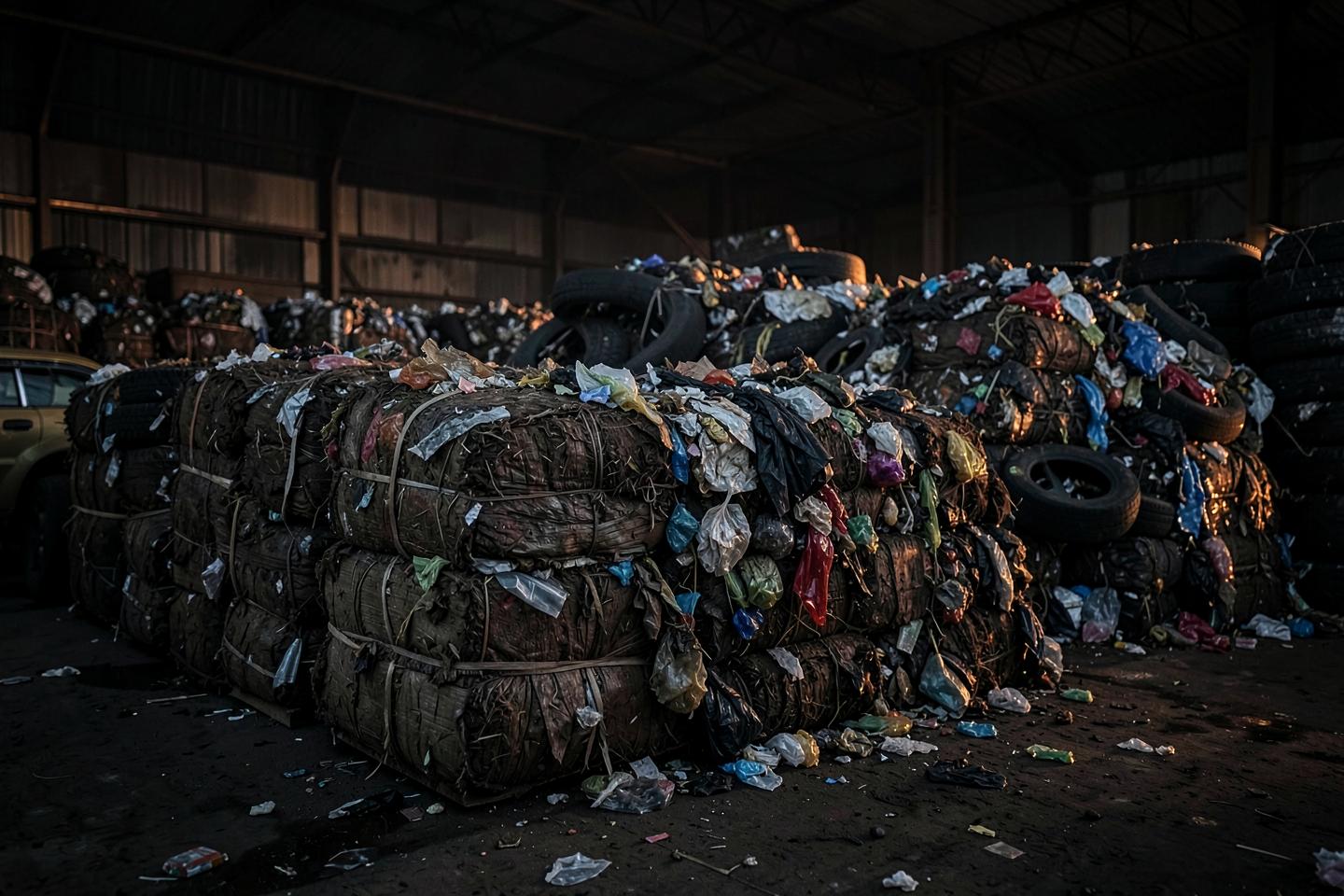
Examples of carbonaceous waste
Streams we assess
- 01
Municipal solid waste
- 02
Refuse-derived fuel
- 03
Waste plastics
- 04
End-of-life tyres
- 05
Biomass
- 06
Agricultural residues
- 07
Industrial carbonaceous waste
- 08
Waste oils and suitable hydrocarbon residues
- 09
Selected sewage / sludge-derived feedstocks where technically appropriate
- 10
Mixed carbon-rich waste streams
Suitability is assessed case by case. Some streams require blending, pre-treatment or partial diversion, and some are not appropriate for thermal conversion at all.
Assessment criteria
What sets the process configuration
Composition
Carbon, hydrogen and inert fractions determine achievable product routes.
Moisture
Water content drives drying duty and net energy available for conversion.
Ash content
Inorganic load affects handling, residue volumes and equipment selection.
Contaminants
Chlorine, sulphur, heavy metals and other species set gas cleaning requirements.
Calorific value
Energy density governs throughput needed for a target output.
Required product
Power, liquid fuels or synthesis gas each impose different specifications.
Project scale
Available tonnage and offtake volume shape train count and plant layout.
Local regulations
Emissions, residue handling and fuel standards constrain the design.
Send us your feedstock data
Proximate and ultimate analysis, moisture, ash, calorific value and available tonnage let our engineering team evaluate potential conversion pathways.